The six things that set the price
| What we measure | Why it matters | What pushes it up |
|---|---|---|
| Linear feet | Gutter is priced by the run. More eave means more gutter. | Big footprints, wraparound porches, outbuildings |
| Five or six inch | Six inch has more material in every foot. | Long roof planes, valleys and metal roofs that need six |
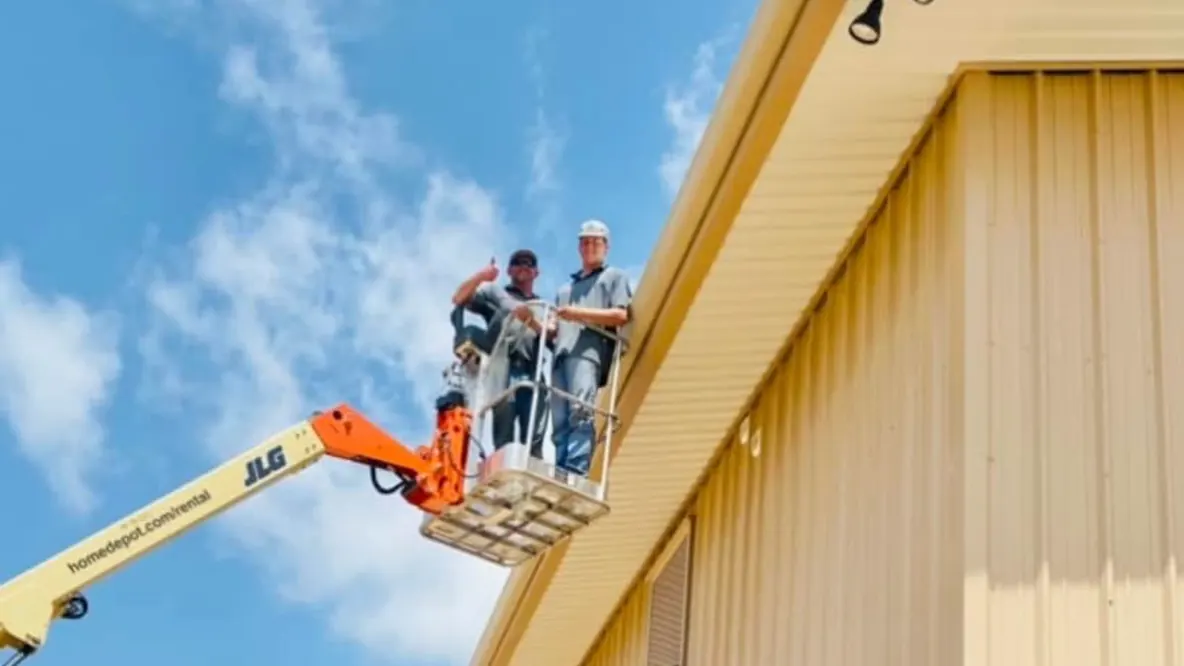
| Stories | Height takes more time and more equipment to work safely. | Two-story elevations, steep lots |
| Downspouts | Each one is material, elbows and labor. | Big roofs, valleys, water that has to be carried away from the slab |
| Corners | The run is one piece, so corners and end caps are the only joins. | Complicated roofs with lots of turns |
| Fascia | New gutter on soft wood means doing the job twice. | Old sectional gutter that leaked behind itself for years |
If you add gutter guards, that is priced on the same visit. Guard prices vary a lot between types, which is why there is no single figure for those either.
Why one piece per run costs what it does
Sectional gutter from a big-box store comes in ten foot lengths joined together on site. On a forty foot run that is three or four joints, and every joint is sealed with a sealant that eventually gives up in Texas sun. Each one is a future drip and a place for live oak leaves to catch.
We roll the gutter on your driveway from flat coil on the trailer, cut to the exact length of each run. There are no joints along the length at all. So the price covers a gutter that has nothing in the middle to work loose, which is the part that keeps costing you on a cheaper job.
What makes a cheap quote cheap
When two quotes for the same house are far apart, it is usually one of these:
- Five inch where the roof needs six, so the overflow you called about never stops.
- Fewer downspouts, spaced for looks instead of placed where the water arrives.
- No check of the fascia, so the rot behind the old gutter gets covered up instead of fixed.
- Sectional gutter with joints along the run.
- No plan for where the water goes once it leaves the downspout.
That last one matters more than people think. A gutter that catches the water and then drops it all in one spot beside the slab has not solved much. We explain why in why water at your slab matters in the Hill Country.
How to compare gutter quotes
Ask every company that quotes you the same questions, and get the answers in writing:
- What size gutter on each run, five inch or six inch, and why?
- Is it rolled on site in one piece, or sectional?
- What holds it up? Hidden hangers screwed into the fascia, or something else?
- How many downspouts, where do they go, and where does the water end up?
- Did you check the fascia, and what did you find?
- Is taking off the old gutter included?
- What is the warranty on the work and on the material, in writing?
We put our warranty terms in writing with the quote, so you have them before you decide.
Repair can be the cheaper answer
Not every overflow needs new gutters. If the run is one piece and the problem is a few failed hangers, a bad pitch or a blocked downspout, a repair costs a fraction of a replacement. If the run is sectional and the joints are going in several places, replacing it usually costs less over the next ten years than repairing it twice. We give you both numbers and let you pick.
Getting a real number
We quote across New Braunfels, Seguin, Schertz, Cibolo, Canyon Lake, Spring Branch, Geronimo and Marion. The look is free. We measure, check the pitch and the fascia, and give you the number, and it does not move unless you change the job. Not sure which size you need first? Read five inch versus six inch gutters, or go straight to gutter installation and call 830-660-9448.
More guides: Five inch versus six inch gutters: which one your house needs, Gutter guards with live oaks and cedar elms: what works and what does not, Why water at your slab matters in the Hill Country, What happens on install day.