| Step | What we do | What you do |
|---|---|---|
| 1. The look | Measure the roof, check the pitch and the fascia, give you one number | Point out where it overflows and where the water ends up |
| 2. Rolling it | Set up the trailer and roll each run to length | Leave room in the driveway if you can |
| 3. Hanging it | Hang the runs, set the fall, fit downspouts and kickouts | Nothing, unless you want to watch |
| 4. The walk | Pick up every offcut and screw, walk the run with you | Ask anything you want |
Step 1: We come look
Before there is an install day, there is a visit. It costs nothing. We measure the roof, look at how the water comes off it, check the pitch of any gutter already up, and look closely at the fascia behind it.
The fascia check matters more than people expect. If water has been getting behind an old gutter for a few seasons, the board can be soft even though it looks fine from the ground. New gutter hung on bad wood is money wasted, so if the fascia needs work, we tell you at the quote, not on the morning of the job.
We also bring the color chart, so you pick from the real thing rather than a screen, and we tell you whether each run needs five inch or six inch. Then you get one number. It does not move unless you change the job.
Step 2: We roll the gutter on your driveway
If you want to watch one part of the day, watch this one. The forming machine lives on the trailer. Flat aluminum coil goes in one end and finished K-style gutter comes out the other, cut to the exact length of each run on your house.
That is what makes it one piece. There are no joints along the length, so there is nothing in the middle of the run to work loose, catch leaves or start dripping in a few years. The only joins on the whole job are at the corners and the end caps.
If you can, leave room in the driveway for the trailer. If you cannot, tell us when we book and we will work out where to set up.
Step 3: We hang it and set the fall
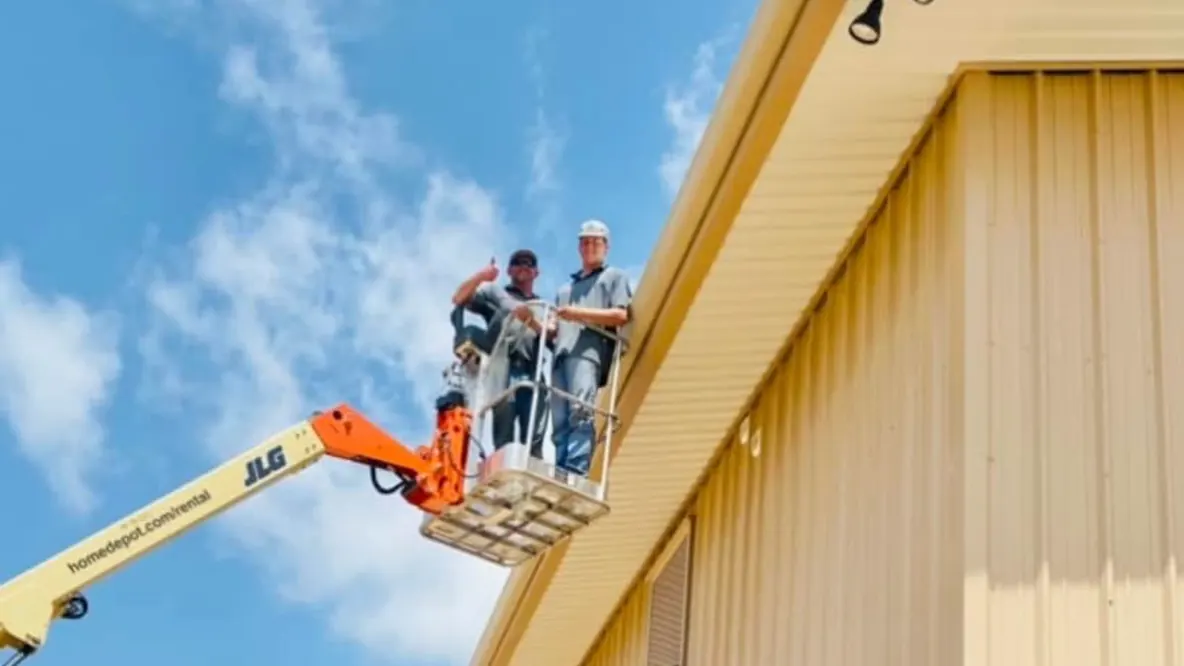
If there is old gutter on the house, it comes off first. Then each new run goes up on hidden hangers screwed into the fascia. Nothing straps over the top of the gutter and nothing shows from the ground.
The fall is the slope of the run toward the downspout. It is small, you will not see it from the yard, and it is the difference between a gutter that drains and one that holds water. We set it on every run.
Downspouts go where the water arrives, not spaced evenly because it looks neat. Then the elbows, and the kickouts where the water needs to leave the house. Where your water ends up matters as much as the gutter itself, which is why we wrote why water at your slab matters.
Step 4: We clean up and walk it with you
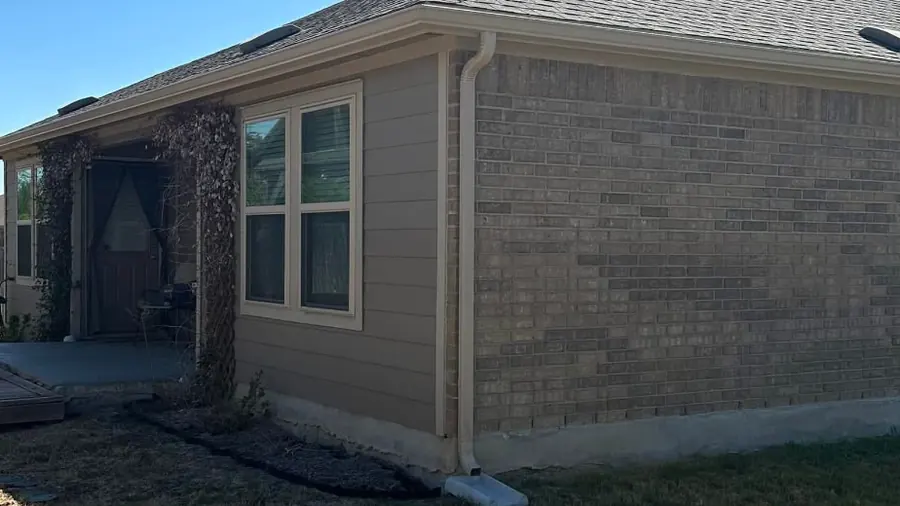
When the last downspout is on, we pick up every offcut and every screw off the ground. Then we walk the whole job with you. We show you where each downspout sends the water, point out anything we noticed about the roof or the fascia, and answer whatever you ask.
How long it takes
Most single-story houses are done in one day. A larger or two-story home can run into a second day. If the fascia needs replacing first, that adds time, and you will know about it from the quote.
Getting ready for install day
- Leave room in the driveway for the trailer if you can.
- Move anything fragile from right under the eaves: planters, patio furniture, the grill.
- Tell us about gate codes, dogs in the yard, or anything we should know about getting around the house.
- You do not need to be home the whole time, but be there for the walk at the end if you can.
Book the first step
It starts with the look, and the look is free. We install across New Braunfels, Seguin, Schertz, Cibolo, Canyon Lake, Spring Branch, Geronimo and Marion. See gutter installation for the details, or call 830-660-9448.
More guides: Five inch versus six inch gutters: which one your house needs, What seamless gutters cost in New Braunfels, and what drives the price, Gutter guards with live oaks and cedar elms: what works and what does not, Why water at your slab matters in the Hill Country.